For a long time, we viewed the tops of our buildings as the “edge” of the world. In the architectural psyche, the roof was a boundary—a hard, flat line where the city ended and the sky began. We treated these millions of square meters as a wasteland of gravel, HVAC units, and weathered bitumen.
But as our cities grow denser and our summers grow hotter, that “edge” is beginning to soften.
The Accidental Wilderness
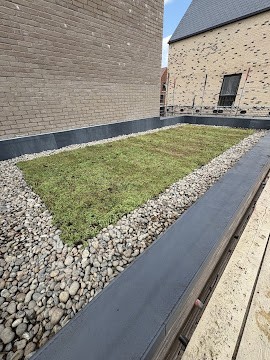
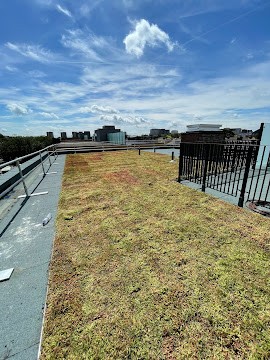
There is a strange, quiet beauty in an urban roof that has been allowed to breathe. Walk onto a project installed by specialists like The Green Roofer, and the first thing you notice isn’t the design—it’s the temperature. On a July afternoon, while the pavement below radiates a shimmering, oppressive heat, a living roof feels like a forest floor. It’s a biological heat sink.
This isn’t just about “gardening in the sky.” It’s about thermal mass. By replacing a black “lid” with a layer of sedum or wildflower substrate, we are effectively applying a cool compress to the forehead of the city.
Infrastructure in Disguise
The shift toward green roofing—and specifically the “Blue-Green” systems now appearing on UK skylines—is a response to a modern crisis. Our Victorian sewers were never designed for the flash-floods of 2026. Every flat roof in a city is, essentially, a high-speed slide for rainwater.
The “innovation” here is actually quite ancient: a sponge. By holding water in the soil and slowly releasing it through evaporation, these roofs act as a decentralized flood-defense system. It is infrastructure masquerading as a meadow.
The Missing Archipelago
Perhaps the most interesting aspect of this movement is the “stepping stone” effect. For a bee or a butterfly, a modern city is a desert. By installing Biodiversity Roofs—patches of native UK flora thirty meters in the air—we are creating a high-altitude archipelago. These aren’t just isolated gardens; they are a network of islands that allow nature to navigate across a sea of concrete.
A New Standard of “Finished”
We are reaching a point where a “bare” roof will soon look unfinished—like a house without a floor or a car without a coat of paint.
Companies like The Green Roofer are essentially the mechanics of this transition. They aren’t “adding” something to a building so much as they are completing it. As we look at the future of the British skyline, the goal is no longer just to keep the rain out, but to let the life in.